I have a keen interest in STOL and backcountry aircraft. My next plane will probably be something with fat tyres and the ability to land short. Actually, that could probably describe me… anyway… I’m always interested when a new type that fits the bill comes to market, especially when it’s a kit aircraft that gives the option to personalise while saving money.
The Orion Cub was developed by South African designer Kevin Hopper, a self-confessed plane nut and budding plane builder. Having his earliest flights in a Cub, he developed an affection for them and decided to build his own – labelled the Teddy. Reproducing it was difficult as the Teddy was largely wood – a timeconsuming approach. So, he redesigned and built a new version – fittingly named the Teddy Too.
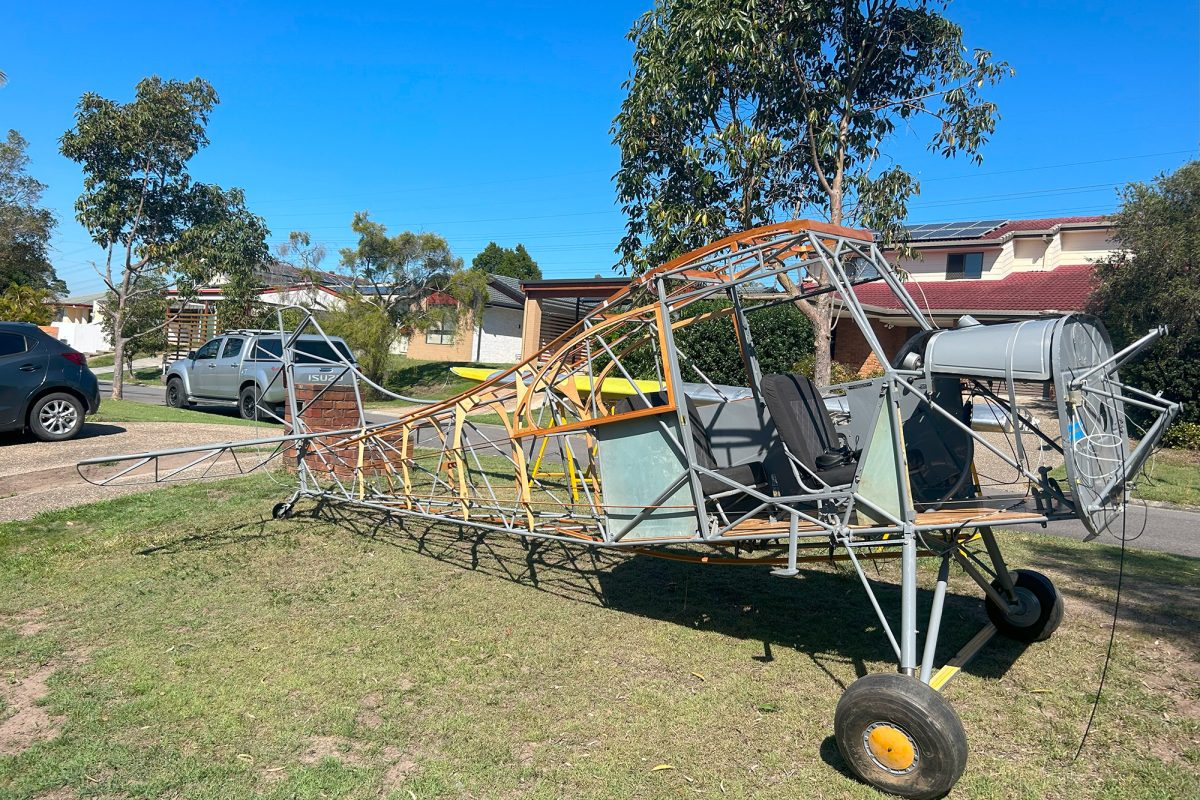
From the Teddy Too grew the Orion Cub – a slightly larger version of the Cub with a 4130 steel tube fuselage and an aluminium sheeted wing. That wing is now a thoroughly modern Riblett airfoil with slotted flaps – there’s a gap between the wing and the flap that assists with maintaining airflow over the flap – which makes for a hilariously low 24 knots stall speed. FRISE ailerons – where the front of the aileron protrudes into the airstream to prevent adverse yaw – ensures that the aircraft will be well behaved when you are down at those low airspeeds.
The Orion Cub evolved to a refined design, optimised for amateur building, offering the traditional Cub’s features, made better with modern materials, design and some hard-won experience.
Enter Errol Van Rensburg, owner of GAP Aviation in Australia, who was looking for something that might fit the Category G class and fill a utility role. According to Errol, ‘My first impression of these aircraft was exceptional quality. This upper level sits at the upper end of the bush type aircraft but at a much lower price.’ Here’s where the magic starts for RAAus members – under the new Group G weight category, this aircraft can be flown with 380kg useful load, depending on options. That’s two big crew members, a full load of fuel and a whole lotta stuff. It’s also light enough that if you keep your accessories modest, it could be registered under 600kg and still have 220kg useful load. For those of us, including me, on the ahem generously proportioned side, maybe Group G is the better option.
One of the biggest issues with Cub-style aircraft is that they mostly originate in the US – hardly surprisingas the original Piper/Taylor Cub was a US design – but being US sourced, they are subject to the poor exchange rate. The Orion Cub, with its origins in South Africa and its assembly in Australia, manages to sidestep the US exchange crunch, which puts the kit on the market from around $80K – excluding engine prop and avionics. For a kit of this quality, that represents good value. There will also be a quick build kit available for a little extra, with the tail and fuselage covered already and you build the wings, aileron and flaps.


The standard fitting up front is a Rotax 912 ULS. I can imagine that it would benefit from the fitting of a 914, or 2000fpm climb fans. But you are not limited to Rotax. I’m sure someone will fit a Jabiru 3300 soon enough. Equally well, you could fit a little Lycoming or Continental to it in the appropriate range. However, I think a max 200hp would frighten the hell out of me. That one is for the super STOL crowd. With 126 litres on board as standard, you’re going to be able to get places too – albeit at a leisurely 100ish knots – so pack lunch and a drink. That’s probably a bit unfair, because in this class 100 knots is a good cruising speed.
Currently Errol has the first aircraft in Australia completed with a Rotax 915 and an Airmaster 3-blade electric in flight adjustable propeller. Plus, balloon tyres and beefed-up undercarriage to make a real backwoods/bush machine designed for powerful STOL type stuff out in the boonies. All of those extra goodies take the weight to 445kg, but because this particular example would be registered as Experimental, it still has 355kg of useful load. It does mean a higher stall speed of 33 knots, but all that extra power and adjustable prop will equate to a screaming climb.
My dream retirement includes a plane project like the Orion Cub, probably just not quite as sophisticated as the version Errol has just built. I could actually see this aircraft sitting in my hangar (read: shed) at the farm where, due to the steep nature of the country, it’s more like a carrier landing than an airstrip. The ability to come over the fence at thirty-something knots and drop in could come in very handy. The original Cub could happily operate with about 300 feet of strip, and I think the Orion Cub would probably best that – especially if you fitted a climb prop.
We haven’t had the chance to fly it yet, but you can bet we will as soon as it is available. We will give you the final verdict after that.